
Lake County Probate Court Venue
Lake County probate matters are heard through the Lake Circuit Court. The Circuit Court page identifies the court as the 31st Judicial Circuit and lists probate and guardianship among the civil matters it hears. It also states that Jewell Harris serves as Probate Commissioner by appointment of the Circuit Judge. That structure is important because Lake County probate records are not filed in a separate probate-court office with a different clerk. The same unified court clerk keeps records for the Circuit and Superior Courts.
The official Lake Circuit Court source identifies probate and guardianship as part of Lake County court jurisdiction.
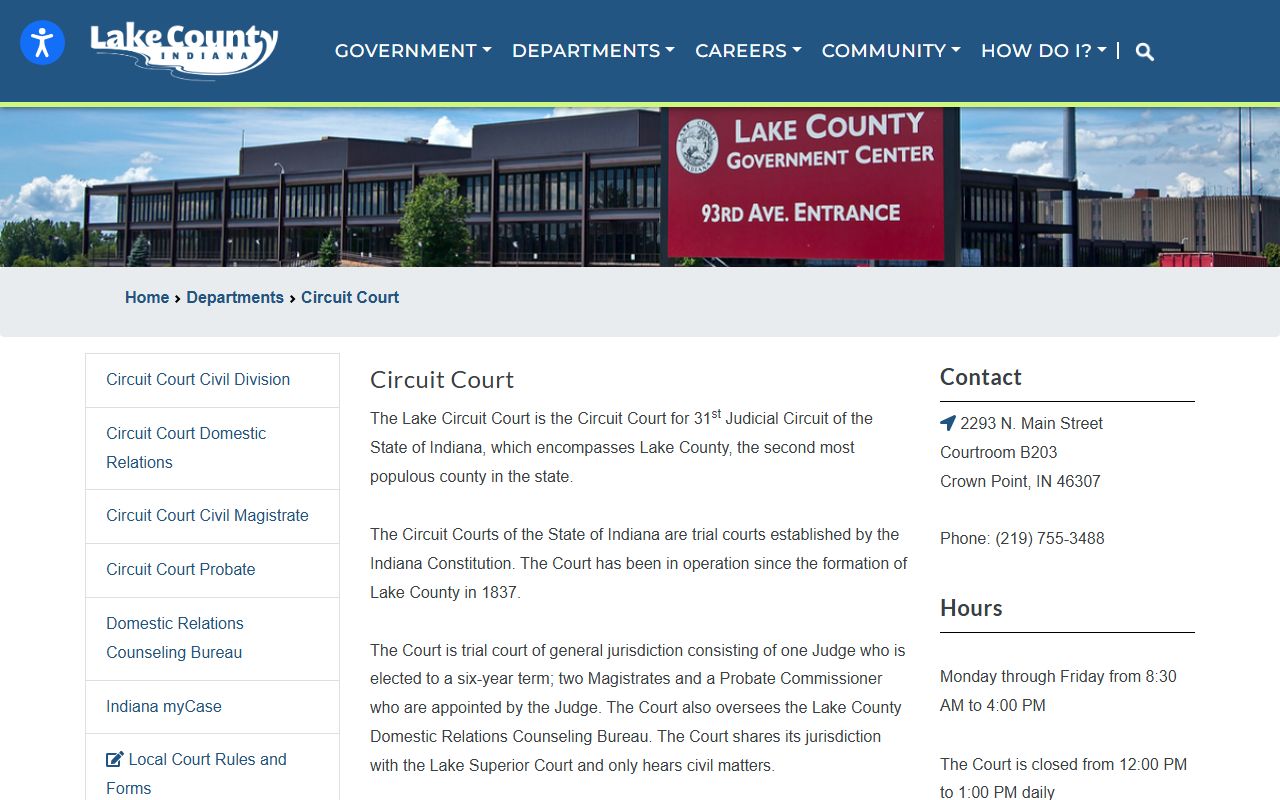
That court source anchors Lake County probate access to the Circuit Court rather than to a stand-alone probate court.
Probate records can include supervised and unsupervised estates, estate miscellaneous files, guardianship files, trust matters, wills, inventories, accountings, creditor notices, heirship material, orders appointing a personal representative, letters testamentary, letters of administration, and guardianship appointment or reporting records. The Clerk of the Lake Circuit/Superior Court states that the clerk keeps a record of all wills and matters of trust in probate proceedings, which makes the clerk the practical copy channel for recorded probate documents.
Lake County Probate Terms
Probate terms can be precise, and the label on a case affects both the filing path and public access. In Lake County, estate and guardianship files are routed through the Circuit Court probate jurisdiction, while public search results may use Indiana case-type codes such as ES, EU, EM, GU, GM, or TR. These short definitions help connect those file types to the records a clerk or MyCase search may show.
- Testator
- A person who made a will before death.
- Executor
- A person named in a will to carry out the will, often called a personal representative after appointment.
- Intestate
- A death without a valid will, so Indiana law controls who may inherit and who may administer the estate.
- Guardianship
- A court case appointing someone to make decisions for a minor or an incapacitated adult.
- Conservatorship
- A property-management term used in some states; for Lake County, ask for the guardianship or probate file that controls protected-person assets.
- Letters
- Court-issued proof that a personal representative or guardian has authority to act.
Search Lake County Probate Records
Online Lake County probate record access starts with Indiana MyCase or the Indiana public courts portal. Search by party name, decedent name when it appears as a party, case number, or attorney. Probate case types may be visible when the file is not confidential, but document access varies. Indiana's document access table in the research file says non-confidential orders may be online for many estate categories, while other materials may be in-person only or unavailable to public users.
- Search MyCase by the decedent, estate, guardian, protected person, attorney, or case number if known.
- Check the court and county on the result to confirm it is a Lake County Circuit Court probate or guardianship matter.
- Review the case summary for estate, guardianship, trust, order, hearing, and filing entries that are public.
- Contact the Crown Point clerk when documents, certified letters, wills, or older records are not available online.
- Use the Lake County Courts forms page when a new estate, guardianship, or related ADR form is needed.
Note: MyCase is a public information service; certified probate records must be verified with the court or clerk maintaining the file.
Lake County Probate Contact Cards
Probate access usually involves two Lake County offices: the Circuit Court for the case and the clerk for filings and copies. The court hears probate and guardianship matters, while the clerk receives filings, keeps wills and trust records, and makes certified copies. Branch offices can matter for some older or locally stored files, but the research identifies Crown Point as the primary probate contact point.
Lake Circuit Court
2293 N. Main Street, Courtroom B203
Crown Point, IN 46307
(219) 755-3488
Monday-Friday 8:30 AM-4:00 PM
Closed daily 12:00 PM-1:00 PM
Clerk of the Lake Circuit/Superior Court
Courts Building, 1st Floor
2293 N. Main Street
Crown Point, IN 46307
(219) 755-3460
Fax: (219) 755-3520
Lake County Probate Filing Fees
Lake County probate filing fees are published through the clerk's filing-fee resources, but the exact probate amounts were not extracted from the official PDFs in the research file. Use the current Lake County Clerk court costs and filing fees page before filing an estate, guardianship, trust, or miscellaneous probate matter. The same page links current LADOS fee schedules, a bond-priority schedule, and Clerk Filing Fees effective March 10, 2026.
The Lake County Clerk filing-fee source is the proper place to verify current probate costs before submitting a case.
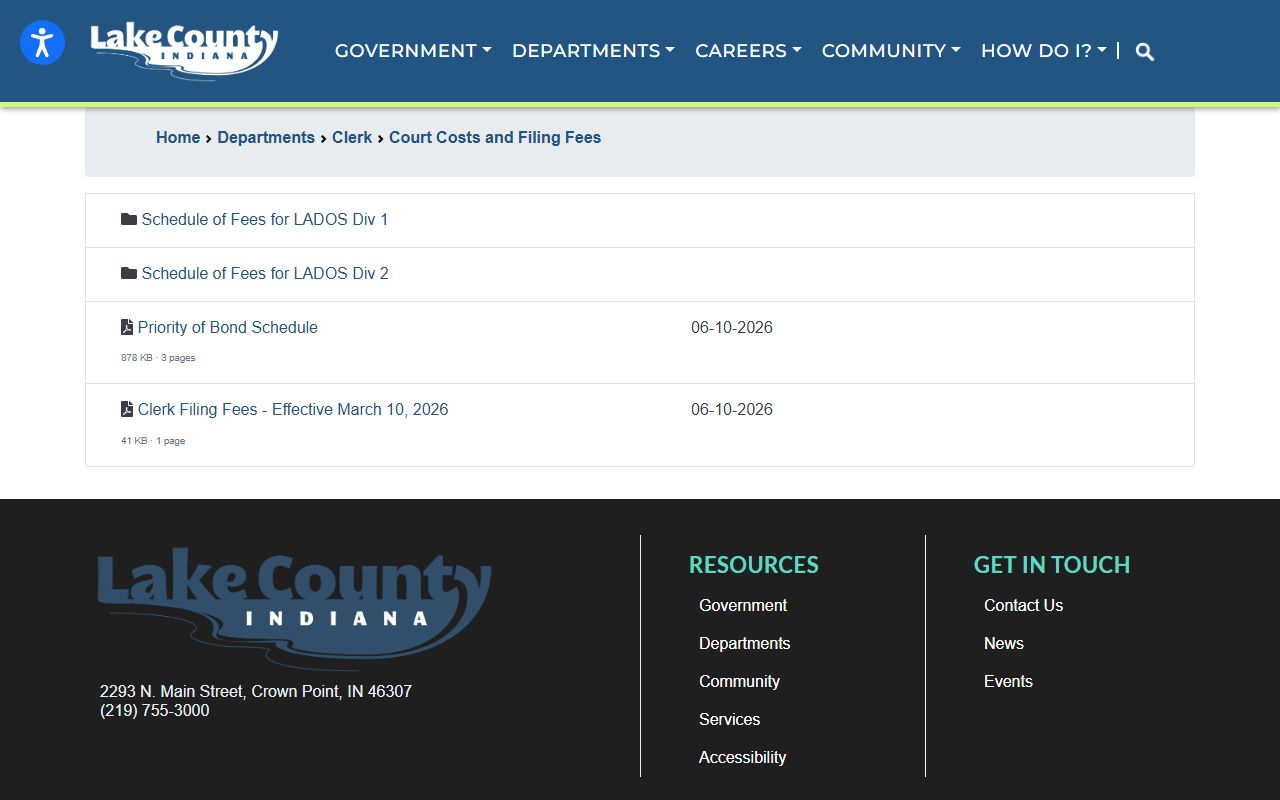
Because probate fees can change by filing type, the linked fee page is more reliable than an old copied amount.
| Probate Item | Amount or Verification Source |
|---|---|
| Estate filing | Verify current Clerk Filing Fees schedule |
| Guardianship filing | Verify current Clerk Filing Fees schedule |
| Trust or estate miscellaneous filing | Verify current Clerk Filing Fees schedule |
| Certified probate copy | Verify with the Clerk of the Lake Circuit/Superior Court |
| Fee waiver request | Ask the clerk or court which form applies to the filing |
What Lake County Probate Records Show
A Lake County probate record may show the filing date, case number, case type, petitioner, estate name, decedent name, personal representative, guardian, protected person, attorney appearances, hearing dates, orders, notices, inventories, accountings, claims, distributions, and closing entries. Not every record type is public in full. Some case summary details may appear online, while documents with account numbers, medical facts, minor information, protected-person details, or sealed material may be redacted or withheld.
| Case Type | What It Usually Involves |
|---|---|
| ES | Estate supervised, with closer court oversight of administration. |
| EU | Estate unsupervised, often with fewer court approvals after appointment. |
| EM | Estate miscellaneous matters that do not fit a standard estate path. |
| GU | Guardianship for a minor or incapacitated adult. |
| GM | Guardianship miscellaneous, with stronger access limits in some situations. |
| TR | Trust-related proceedings and matters of trust kept by the clerk. |
Indiana Probate Code Records
Indiana probate procedure is grounded in the Indiana Probate Code, IC Title 29. That title covers estates, probate administration, guardianship-related proceedings, and related filings. Lake County users still file locally through the Circuit Court and clerk, but state law explains why estate administration, guardianship duties, creditor claims, and court appointment powers follow Indiana-wide rules.
The Indiana Probate Code source is the state-law backdrop for Lake County probate records and guardianship filings.
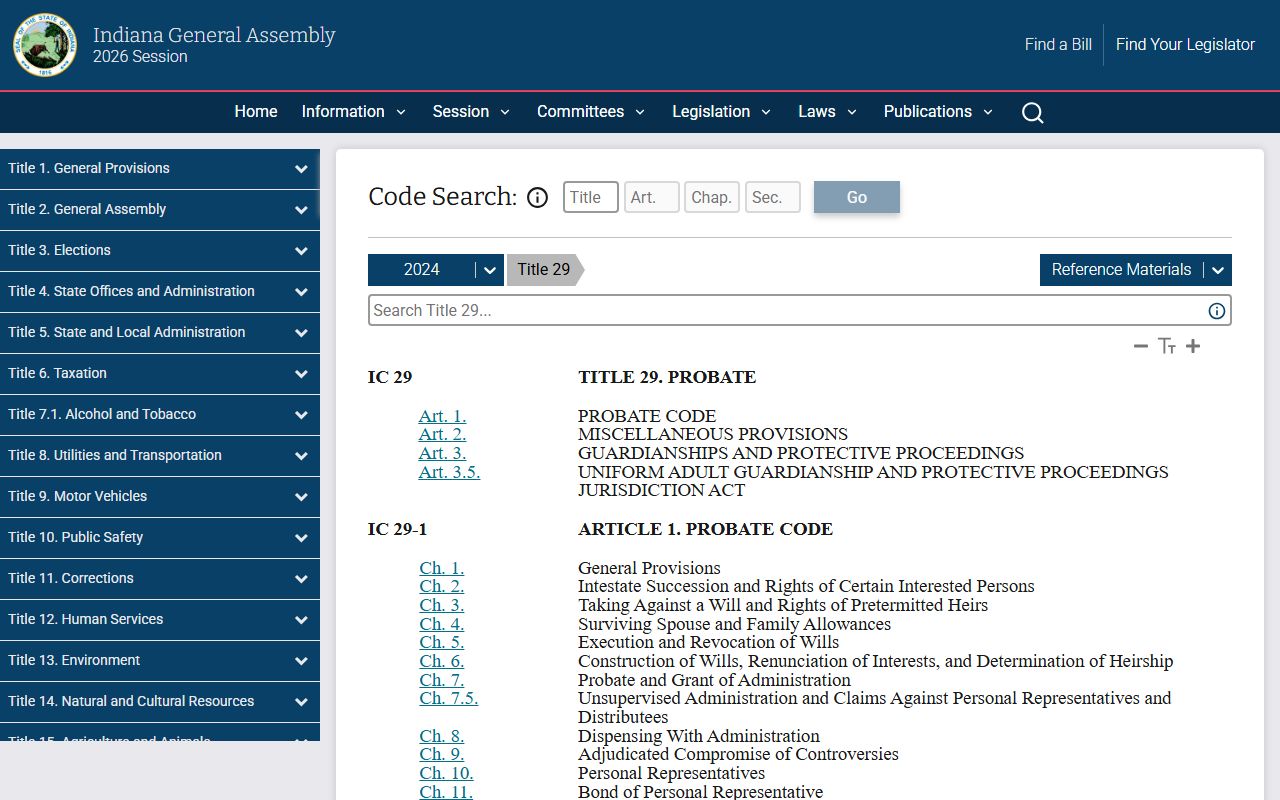
That legal source supports the local distinction between probate case access and broader public-record requests.
Restricted Lake County Probate Records
Probate files can be more sensitive than ordinary civil records. Guardianship cases may involve medical facts, personal care decisions, minor children, protected adults, and financial account details. Estate files can include inventories, creditor claims, addresses, and asset information. The research file notes that guardianship miscellaneous records under IC 29-3-4 have no public online access and no public online documents, although non-confidential in-person access may exist. For any uncertain document, ask the clerk whether the requester must be a party, attorney, fiduciary, heir, or person with a court order.
Lake County probate work often follows a predictable path: decide whether an estate, small-estate procedure, trust matter, or guardianship is needed; file the petition or application with the Clerk; provide the original will if one exists; give required notices; attend any hearing set by the Probate Commissioner or judge; and complete inventories, creditor notices, accountings, reports, or closing steps. The online record helps track that process, but the official file and certified proof remain with the court and clerk.